This month at KnowTheGlow, the team recently had the opportunity to reconnect with Dr. Danny Haddad. Dr.Haddad is a director at CBM Global Disability Inclusion and spent the afternoon discussing exciting progress in newborn eye screening initiatives and exploring opportunities for future collaboration. The conversation emphasised how innovative partnerships and integrated healthcare approaches are transforming early childhood eye care in low-resource settings.
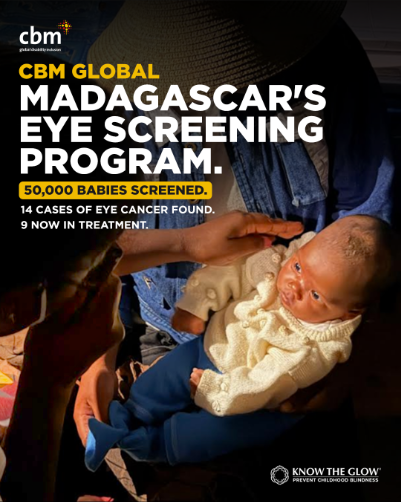
One of the most encouraging updates Dr.Haddad had to share with the team came from Madagascar, where CBM Global has piloted a red reflex screening program using the ArcLight device. By training primary healthcare workers to perform eye screening during routine vaccination visits, the initiative screened approximately 50,000 children under 18 months of age across two districts in its first year.
The results have been remarkable. The journey of this program identified 14 cases of retinoblastoma, compared to only six congenital cataract cases, and no retinoblastoma cases, that were detected from previous year through traditional referral pathways. Of the children diagnosed with retinoblastoma, nine are currently undergoing chemotherapy with positive outcomes, while five presented with disease too advanced for treatment. The program also uncovered additional health concerns, including cases of vitamin A deficiency and severe malnutrition, demonstrating the broader impact that integrated screening can have on child health.
A key factor in the program’s success has been its seamless incorporation into existing healthcare systems. Rather than creating separate appointments or additional burdens for healthcare workers, red reflex screening was built directly into routine immunization services. With vaccination attendance rates in Madagascar reaching approximately 70% of children under five, healthcare workers embraced the systematic approach as part of their everyday responsibilities.
The Madagascar initiative has already expanded from two to six districts, with ambitious plans to eventually reach all of the country’s approximately one million annual births by 2030. Dr. Haddad shared that CBM Global is working alongside government partners and international funders to make nationwide implementation a reality. Looking ahead, the group discussed opportunities to deepen collaboration, including adapting KnowTheGlow educational campaign materials for use in both Madagascar and Nigeria. Existing resources translated into English, Igbo, Yoruba, and Hausa will help support these efforts, while additional discussions focused on translating KnowTheGlow materials into even more languages that could be utilized not only within Madagascar, but across broader international awareness initiatives as well. Not long after the call, KnowTheGlow Program Manager for Africa, Ruth Ngaruiya, was also able to meet with Jaona Iandrinirina, CBM Global’s Inclusive Eye Health Advisor at the IAPB conference in Kenya last week, leading to further meaningful conversations about collaborative efforts in Madagascar and other countries.
The discussion also turned toward Nigeria, where CBM Global hopes to replicate Madagascar’s success. Initial conversations are underway with partners including ECWA Eye Hospital in Kano and HANDS (Health and Development Systems) to establish newborn screening programs within northern provinces. Similar to Madagascar, the focus will be on embedding screening into routine vaccination workflows to maximize reach and sustainability.
The meeting also emphasized the importance of supporting families beyond diagnosis. Dr. Haddad described efforts to integrate mental health support for caregivers into pediatric eye health programs and highlighted the role of multidisciplinary training for doctors, nurses, and midwives using ArcLight technology.
Megan shared encouraging updates from KnowTheGlow’s awareness efforts, noting progress in reducing the time between caregivers first noticing symptoms and children receiving diagnoses for conditions such as congenital cataracts and retinoblastoma. Both organizations recognized the value of combining community education with health system strengthening to ensure children are diagnosed and treated earlier.
Together, the teams also explored the possibility of developing joint commitments and advocacy strategies ahead of the Global Summit for Eye Health, using Madagascar’s success story as a powerful example of what is possible when newborn screening becomes a routine part of healthcare delivery.
As programs continue to expand, the shared vision remains clear: ensuring that children are identified earlier, referred faster, and given the best possible chance at sight and life saving treatment. Through collaboration, innovation, and persistence, what began as a pilot project in Madagascar has the potential to reshape pediatric eye care across countries and communities worldwide.