KnowTheGlow Co-Founder Megan Webber, Director of Global Operations Helene Dameris, and Programs Manager for Africa Ruth Ngaruiya, recently joined Oliver Mwanko, Head of Marketing and Customer Engagement at Dot Glasses, for a discussion that explored his work and vision in expanding access to affordable eyewear. The conversation was sparked by a shared mission to bridge the gap between identifying a vision issue and providing a tangible solution, particularly in regions where traditional optometry services are out of reach for many families. While KnowTheGlow has spent years illuminating the path to early detection of conditions like The Glow or leukocoria, the need for a seamless transition from screening to sight became the catalyst for this dialogue with Dot Glasses. The discussion quickly centered on Oliver’s journey and the transformative model he leads at Dot Glasses.
Joining from Kenya, Oliver shared a professional path that spans diverse sectors. Before Dot Glasses, he contributed to various organizations, including a Swiss eyewear company, where over five years he scaled the business from a single shop to nearly a hundred locations across seven countries.
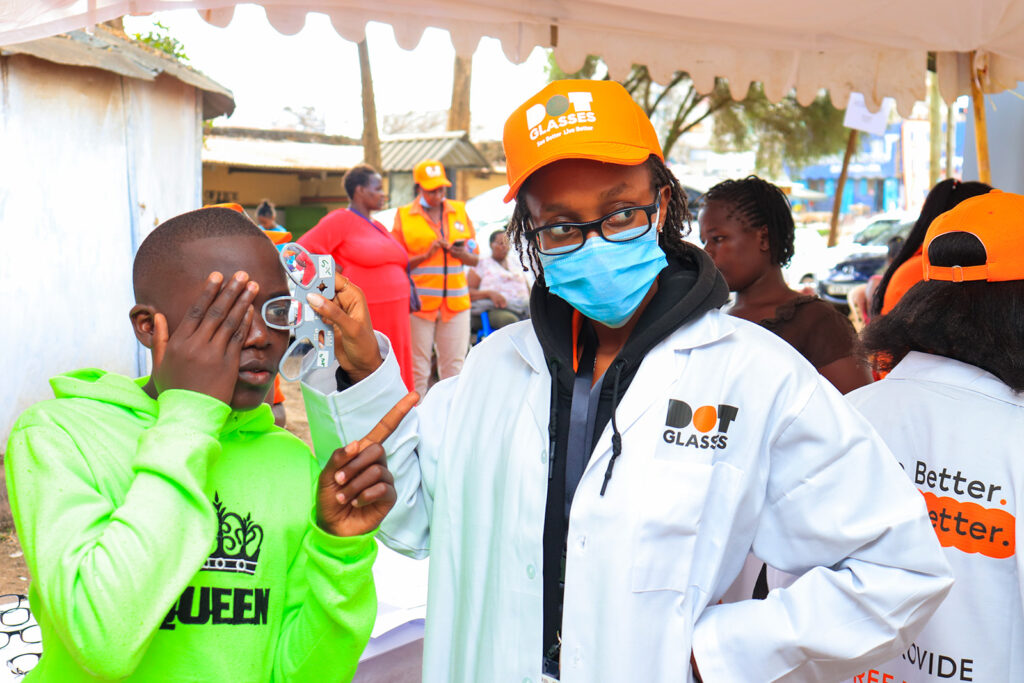
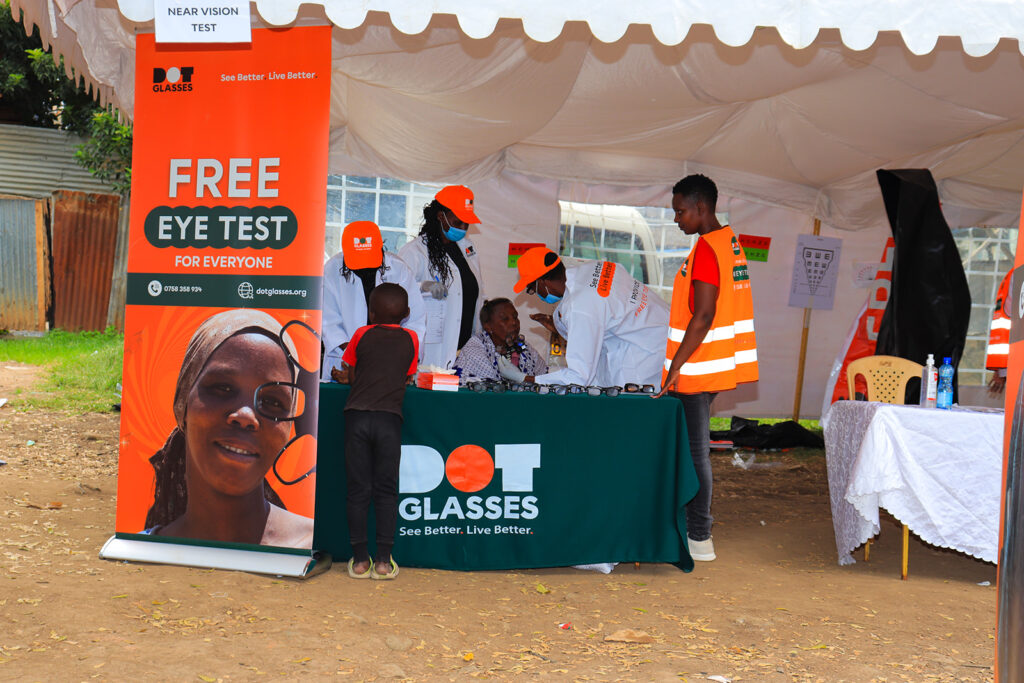
Dot Glasses now operates in more than thirteen countries across Africa, including Kenya, Uganda, Ethiopia, Tanzania, Rwanda, Nigeria, Ghana, Zambia, Zimbabwe, South Africa, Ivory Coast, and the Democratic Republic of Congo as well as several Caribbean nations. Their goal is clear: provide affordable, quality glasses in low- and middle-income communities. To make this possible, Oliver relies on what he calls the “magic bag”, a portable optical kit about the size of a laptop bag. It contains everything needed for a small optical shop: over twenty pairs of glasses, sixty lenses, and tools for comprehensive eye testing, including near and distance charts, color vision tests, and cards showing common eye conditions. The glasses themselves are made from durable polycarbonate in collaboration with Mercedes-Benz, fully adjustable, and can be assembled in under a minute so patients leave with fitted glasses immediately. For children, interchangeable frames and lenses allow personalization.
The operational model emphasizes community engagement and empowerment. Dot Glasses partners with local health facilities, entrepreneurs, and eye care professionals, training community health workers to act as field marketers. These teams mobilize communities through schools, churches, markets, and villages, directing patients to retail points where screening and glasses fitting are conducted on-site.
Oliver explained that the economics are designed to make impact scalable. Their model is self-sustaining: by keeping wholesale costs low, they empower local entrepreneurs and health facilities to provide high-quality care without relying on permanent subsidies. Partners receive ongoing support, including multilingual training through a learning management system, performance incentives, and marketing guidance. Integration with the Arclight Project further strengthens this approach, combining vision correction with tools to detect eye conditions in children across Africa and the Caribbean, bridging detection and treatment in a single pathway.
Operating across multiple countries comes with unique logistical and market challenges. Oliver shared how Dot Glasses adapts to each context, ensuring that regulations, customs processes, and local practices are navigated smoothly. Through close collaboration with local partners and ministries, the team has successfully scaled operations, with expansion progressing steadily across other regions.
Beyond his professional accomplishments, Oliver shared glimpses of a vibrant personal life. Fluent in six languages and a gospel artist, he balances his career with musical pursuits and continues to engage audiences through his performances.
As the conversation drew to a close, it was evident that the synergy between the two organizations offers a powerful pathway for pediatric eye health. By combining the awareness and early detection expertise of one with the rapid, affordable dispensing model of the other, the potential to transform lives across the continent is significant. Both organizations are now looking to explore future opportunities as they come by to align their efforts in various countries across Africa.